Transport Allowance
Cover the commute that fits your city
Monthly transport credit for ride-hailing, fuel, metro, and bus — employees pick what works for them.
Commuting in Lagos, Nairobi, or Cairo is expensive, time-consuming, and stressful. A transport allowance doesn't just reduce a financial burden — it signals to employees that you understand the reality of getting to work every day. That recognition matters.
4
Ride platforms integrated
9
Transit networks covered
15 min
Credit loads within
10+
Markets
The benefit explained
What is it, exactly?
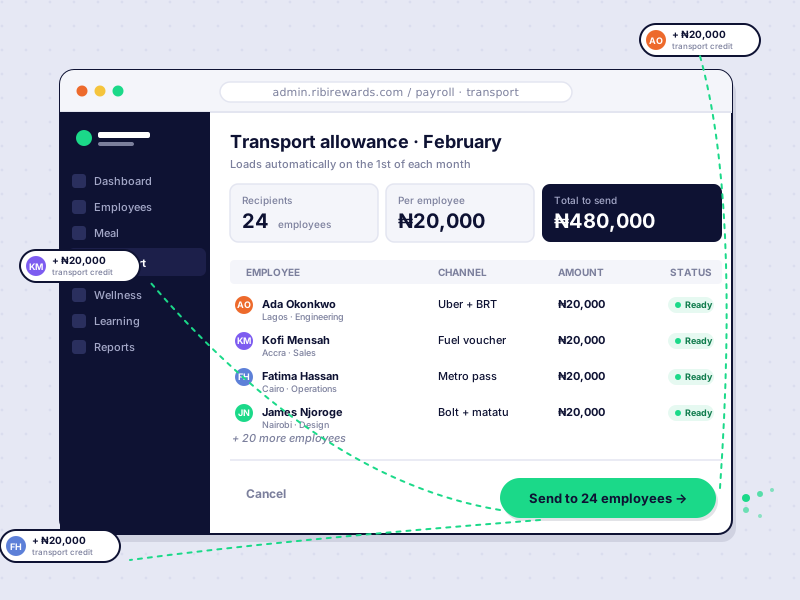
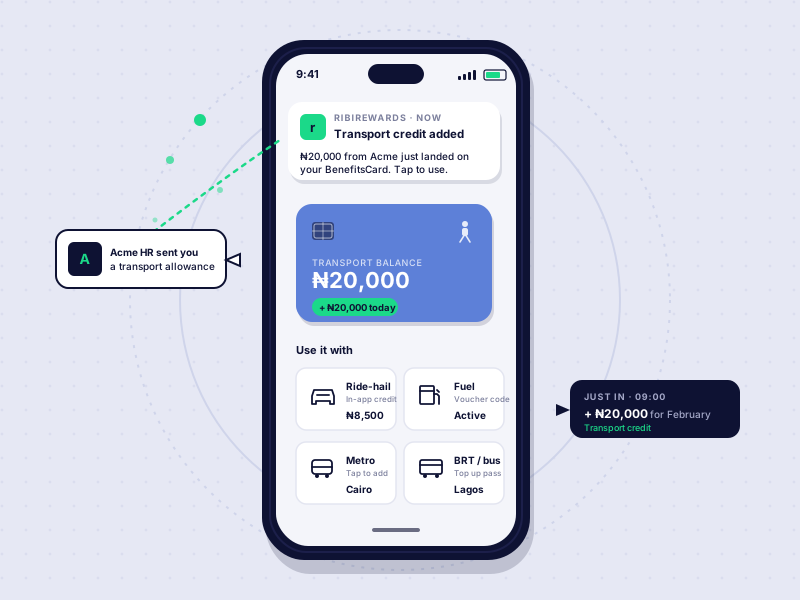
A monthly transport allowance loaded to the BenefitsCard. Employees choose how to use it — ride credits, fuel vouchers, metro passes, or bus rapid transit credits — based on how they actually commute.
Step by step
How it works
From setup to employees spending — here's the full flow.
Company sets a monthly transport allowance per employee tier.
On the 1st of the month, credit loads to each employee's BenefitsCard.
Employees select their channel: ride credit, fuel, metro, or bus.
Credits load directly to ride-hailing accounts or voucher codes are issued for fuel and transit.
Credit resets monthly.
Full coverage
What's included
The difference
Before RibiBenefits vs. after
- Employees submit transport receipts monthly
- Finance reconciles and processes reimbursements
- Average 3-week lag on reimbursement
- Receipts lost, disputes common
- No data on actual transport spend
- Credit loads automatically on the 1st
- No receipts, no reimbursement cycle
- Instant loading — funds available same day
- Digital records for every transaction
- Full usage dashboard by market and grade
For your organisation
Why HR teams choose it
Reduce commute stress
Transport costs are a real burden for employees in African cities. A monthly allowance directly improves take-home value.
Market-relevant channels
We activate the right transport options per city — ride-hailing in Nairobi, ride and metro credits in Cairo, BRT credits in Lagos.
One invoice
You don't manage separate vendor relationships for each transport channel or market. We handle it all.
Targeting
Who is this benefit for?
This benefit works across many employee profiles. Here's where it has the most impact.
Office-based teams in major cities
Daily commuting costs in Lagos, Nairobi, and Cairo are significant. A transport credit directly offsets them.
Field and sales teams
Teams covering territory need fuel or ride credits. This eliminates the reimbursement cycle.
Junior and mid-level staff
Transport costs represent a larger share of income at lower grades. The impact is felt most here.
New hires in their first 30 days
Covering commute costs during onboarding removes a practical friction point in those critical first weeks.
The question Finance always asks
Why not just add it to salary?
Transport costs are invisible in a salary increase — they're absorbed into general spending. A dedicated transport credit is used for transport. Employees associate the benefit with their commute every single day, not once at month-end when salary lands. That daily touchpoint creates a consistent, visible reminder of your investment in their working life.
The perception gap
Equivalent cash added to salary
55% perceived value vs cost
Named benefit credit
87% perceived value vs cost
Based on RibiBenefits employee surveys across African markets, 2024.
Employee perspective
What employees get
Benefits only work if employees actually use them. Here's why they do.
Works with your commute
Whether you ride-hail, drive, or take the metro — your allowance covers it.
Instant loading
Ride credit appears in your ride app account within minutes. Fuel and transit codes arrive by email.
Split how you like
Use some for rides and some for fuel. The platform doesn't restrict how you allocate within your allowance.
“We were spending hours every month reconciling transport reimbursements. With RibiBenefits, the credit loads automatically and employees sort themselves out. Our finance team got a full day back each month immediately.”
Where it works
Available markets
Tax & compliance note
In Nigeria, transport allowances up to ₦20,000/month are typically exempt from PAYE under the Personal Income Tax Act. In Kenya, commuter benefits have specific exemption thresholds. Our team will advise during onboarding.
Common questions
Questions
Build your package
Pair it with
Most companies combine 3–5 benefit categories. Here's what works well alongside transport allowance.
Ready when you are
Add Transport Allowance to your package
Book a demo and we'll show you exactly how it works for your team and markets. Most companies go live within two weeks.
- No procurement process — one contract
- Go live in 2 weeks or less
- Dedicated onboarding support included
- Cancel any time, no lock-in