Fuel Allowance
Offset the daily cost of getting to work.
Monthly fuel vouchers redeemable at major petrol stations across Africa. For the employees who drive — this is the benefit they feel most.
For senior staff and field teams, fuel is not an occasional expense — it's a daily cost that comes directly out of take-home pay. A fuel allowance at the right grade level is one of the fastest-redeemed, most-appreciated benefits we offer. Employees notice it at every fill-up.
500+
Partner petrol stations
6
Countries
Seconds
Processing time at pump
Yes (3 months)
Carry-over available
The benefit explained
What is it, exactly?
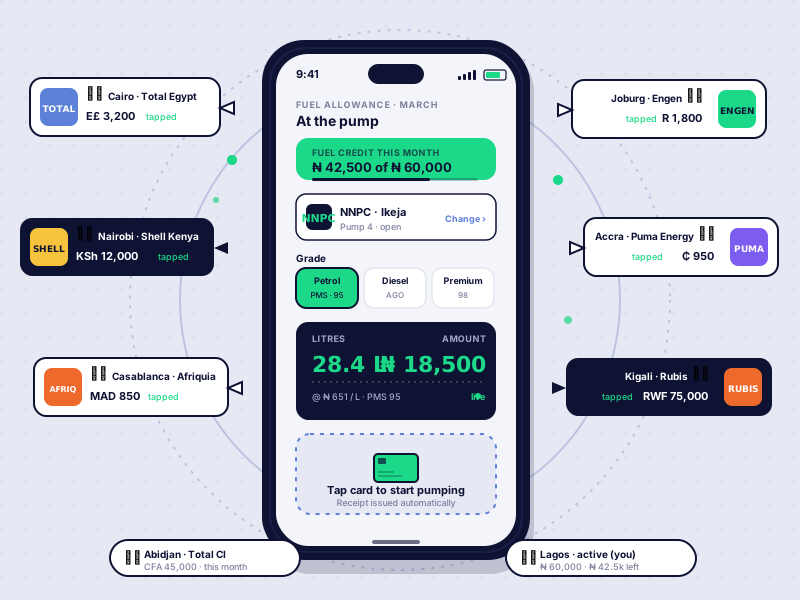
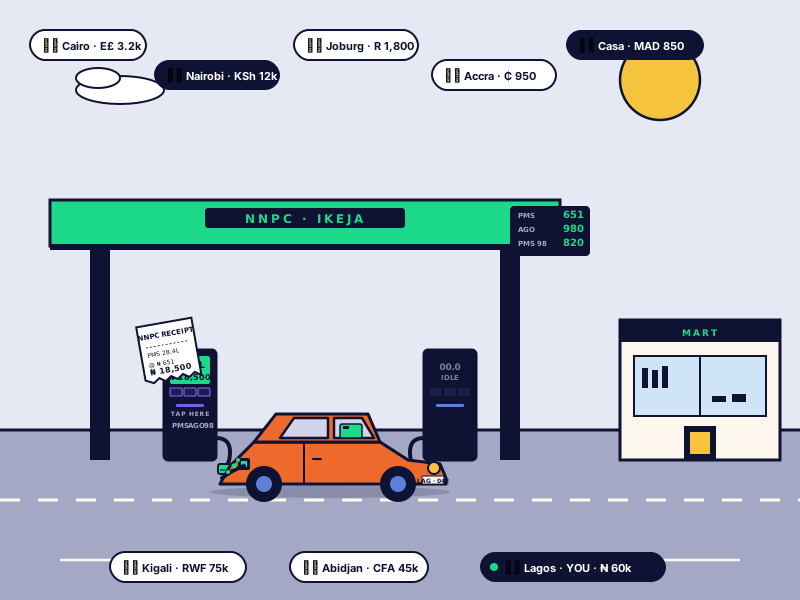
A monthly fuel credit loaded to each eligible employee's BenefitsCard, redeemable at partner petrol stations across Nigeria, Kenya, South Africa, Ghana, Egypt, and Morocco. For employees who commute by car — senior staff, field teams, sales reps — a fuel allowance is among the most appreciated benefits available.
Step by step
How it works
From setup to employees spending — here's the full flow.
Your company sets a monthly fuel credit per eligible grade or team.
Credit loads to the BenefitsCard on the 1st of each month.
Employee presents card at a partner petrol station pump or kiosk.
Transaction processed in seconds. Receipt issued as normal.
Monthly usage visible in HR dashboard at category level.
Full coverage
What's included
The difference
Before RibiBenefits vs. after
- Fuel allowance paid as taxable cash in payroll
- Taxed as income — employees receive less than intended
- No visibility on whether allowance is used for fuel
- Field teams submit receipts for reimbursement
- Different fuel policies across grades — manually managed
- Fuel credit issued as a named benefit — separate from salary
- Structured to minimise tax exposure where possible
- Every transaction at a partner station is recorded
- No receipts — card is accepted directly at the pump
- Grade-based eligibility configured once, managed automatically
For your organisation
Why HR teams choose it
High perceived value for senior and field staff
Senior employees and field teams who drive daily appreciate fuel credits more than almost any other benefit. It's a cost they feel at every fill-up.
Retain field sales teams
Field sales reps covering large territories spend significantly on fuel. Covering part of this cost is a retention factor specific to this employee group.
Scalable to any fleet size
Whether you have 5 field reps or 500, the fuel credit programme scales without additional administration.
Targeting
Who is this benefit for?
This benefit works across many employee profiles. Here's where it has the most impact.
Senior managers and directors
Grade-level fuel allowances are an expected part of the package at senior levels in most African markets. Not offering them puts you below market.
Field sales and operations teams
Covering fuel for teams who drive to cover territory removes a significant personal cost and eliminates expense reimbursement friction.
Companies in Nigeria, Kenya, and South Africa
These markets have the highest private car commute rates among our customer base. Fuel benefits have the greatest impact here.
Engineering and maintenance teams
Technical teams who travel between sites benefit from fuel credits that remove the need for individual expense claims.
The question Finance always asks
Why not just add a fuel allowance to payroll?
Payroll fuel allowances exist at many companies — but they're processed as income, taxed, and forgotten in the general salary figure. A RibiBenefits fuel credit is separate, visible, and ring-fenced for fuel. Employees see it as a named benefit associated with your company — not just more net pay. The psychological difference is significant, and the usage data confirms it: fuel credit is used faster than any other benefit category.
The perception gap
Equivalent cash added to salary
55% perceived value vs cost
Named benefit credit
87% perceived value vs cost
Based on RibiBenefits employee surveys across African markets, 2024.
Employee perspective
What employees get
Benefits only work if employees actually use them. Here's why they do.
Works at the stations you already use
Partner stations are the major networks employees already fill up at. No new apps, no behaviour change.
Any fuel grade
Petrol, diesel, or premium — the credit covers whatever the vehicle requires.
Immediate value
A fuel credit that loads on the 1st is used by most employees within the first week. It's one of the fastest-redeemed benefit categories.
“I've been in HR in Nigeria for 12 years. Fuel allowance is non-negotiable at any grade above officer level. What changed with RibiBenefits is that we eliminated the monthly reconciliation nightmare. Credit loads automatically, employees use it, we see the data. That's it.”
Where it works
Available markets
Tax & compliance note
Fuel benefits have complex tax treatment in African markets. In Nigeria, petrol allowances paid in kind to employees may be structured to reduce PAYE liability compared to cash equivalents. In Kenya and South Africa, similar optimisations are possible. This is an area where our tax team adds significant value — we'll review the optimal structure for your markets.
Common questions
Questions
Build your package
Pair it with
Most companies combine 3–5 benefit categories. Here's what works well alongside fuel allowance.
Ready when you are
Add Fuel Allowance to your package
Book a demo and we'll show you exactly how it works for your team and markets. Most companies go live within two weeks.
- No procurement process — one contract
- Go live in 2 weeks or less
- Dedicated onboarding support included
- Cancel any time, no lock-in