Health Access
Health cover that fills the gaps
Telehealth, annual screenings, and dental — ancillary health services that sit alongside your existing HMO.
HMOs cover hospitalisation. They rarely cover the everyday health needs that prevent hospitalisation in the first place — a telehealth call when you're not sure if something is serious, a dental check before it becomes an extraction, an annual blood panel. That's the gap we fill.
Same day
Telehealth availability
80+
Screening centres (accredited)
Zero
Employer data shared
5
Markets
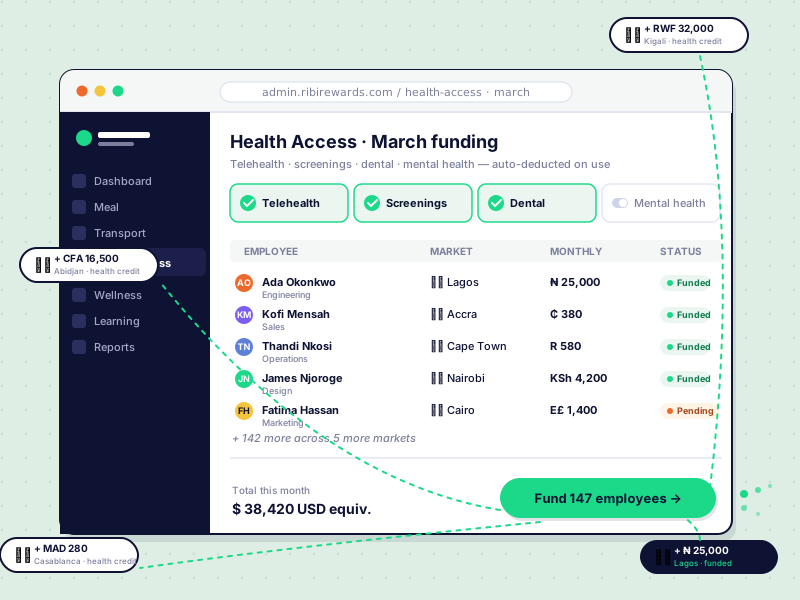
The benefit explained
What is it, exactly?
RibiBenefits Health Access is not health insurance — it's the layer that fills the gaps. Telehealth when employees can't get an appointment, annual screenings to catch things early, dental care that HMOs often leave out. Employer-funded, employee-directed.
Step by step
How it works
From setup to employees spending — here's the full flow.
Employer funds a monthly or annual health credit per employee.
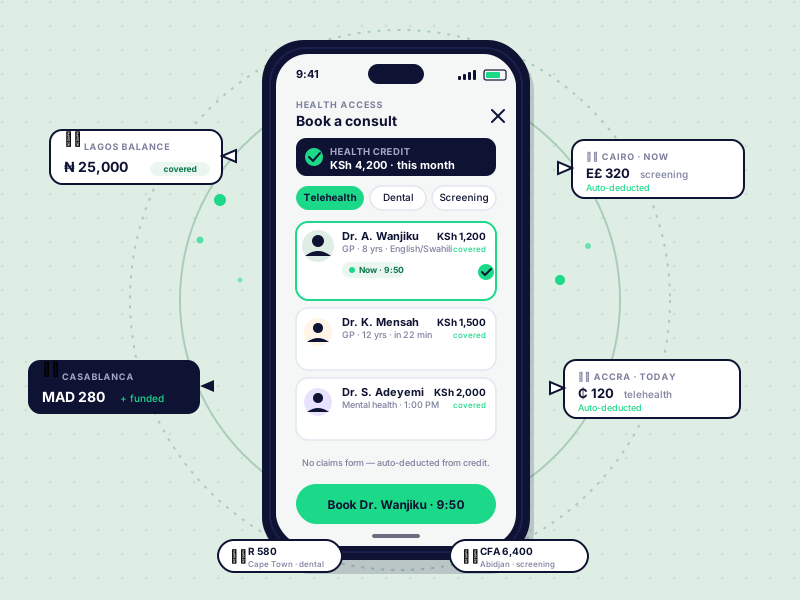
Employees access telehealth calls, dental bookings, and health screenings through the app.
No claims process — credits deduct automatically when a service is booked.
Results and booking confirmations go directly to the employee, never to the employer.
Credits roll over for 30 days for telehealth; annual screenings are valid 12 months.
Full coverage
What's included
The difference
Before RibiBenefits vs. after
- HMO covers only in-hospital care
- Dental not covered — employees pay out of pocket
- 3–5 day wait for GP appointment
- No annual screening programme
- Employees don't use health benefit because it's too complex
- HMO + telehealth + dental + screening in one programme
- Dental check-ups and emergencies fully covered
- Same-day telehealth available via app
- Annual blood panel and ECG for every employee
- 94% of employees access at least one health service per year
For your organisation
Why HR teams choose it
Complement your HMO
This sits alongside — not instead of — your existing health insurance. It covers what HMOs typically miss: telehealth, dental, and preventive screening.
Reduce sick days
Employees who can access a doctor same-day are less likely to let conditions escalate. Annual screenings catch issues early.
Show you care
Access to health support is one of the most powerful signals to employees that their employer takes wellbeing seriously.
Targeting
Who is this benefit for?
This benefit works across many employee profiles. Here's where it has the most impact.
All employees — universal benefit
Health access is a benefit that resonates across every grade, age, and role. Nobody turns down a same-day doctor.
Senior and mid-level staff
Annual screenings are particularly valued by employees aged 30+, where preventive care becomes more relevant.
Companies with high HMO costs
Adding telehealth and dental on top of existing HMO cover costs a fraction of upgrading the HMO plan itself.
Teams in cities with overloaded public health systems
In Lagos, Nairobi, and Cairo, same-day access to a licensed doctor is genuinely hard to get. This removes that barrier.
The question Finance always asks
Why not give a health cash allowance instead?
A health cash allowance gets spent on everything except health — employees have more urgent expenses. A ring-fenced health credit is used for health. Telehealth bookings, screenings, dental appointments — the platform only allows health-related spend. You're not just giving money, you're giving access.
The perception gap
Equivalent cash added to salary
55% perceived value vs cost
Named benefit credit
87% perceived value vs cost
Based on RibiBenefits employee surveys across African markets, 2024.
Employee perspective
What employees get
Benefits only work if employees actually use them. Here's why they do.
No paperwork, no waiting rooms
Book a telehealth consultation in minutes. See a licensed doctor by video or phone the same day.
Your results stay private
Health screening results and consultation details go directly to your personal email — never to your employer.
Annual check-up included
Full blood panel, ECG, and a GP review call — once a year, fully funded by your employer.
“We already had an HMO but the waiting times were terrible and dental wasn't covered. RibiBenefits Health filled both gaps. Our employees now use telehealth for minor things and save the HMO for when they actually need it. Sick days dropped noticeably in the first quarter.”
Where it works
Available markets
Tax & compliance note
Employer-funded health benefits are treated favourably under tax law in most African markets. In Nigeria, contributions toward employee health are generally deductible for employers. We will confirm the specific treatment for your markets during onboarding.
Common questions
Questions
Build your package
Pair it with
Most companies combine 3–5 benefit categories. Here's what works well alongside health access.
Ready when you are
Add Health Access to your package
Book a demo and we'll show you exactly how it works for your team and markets. Most companies go live within two weeks.
- No procurement process — one contract
- Go live in 2 weeks or less
- Dedicated onboarding support included
- Cancel any time, no lock-in