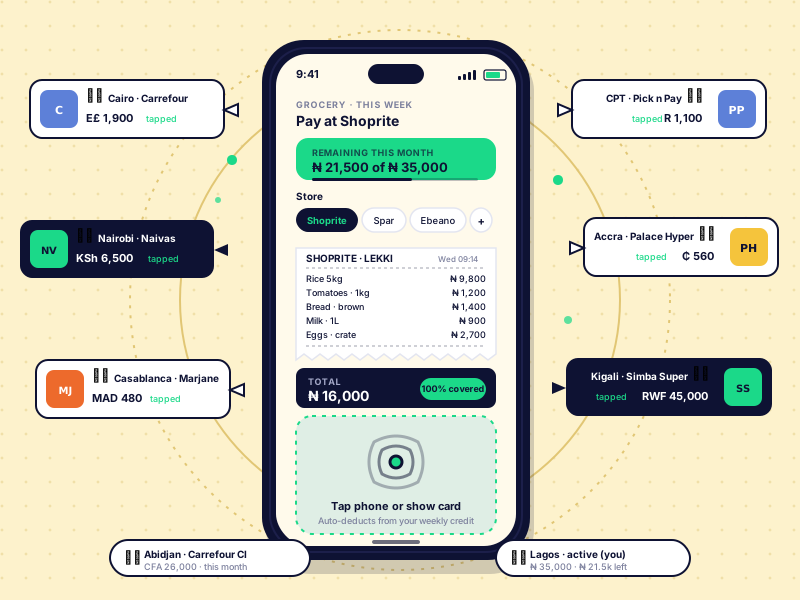
Food inflation across Africa has been significant and sustained. In Nigeria cumulative food inflation since 2022 has been among the highest in the world. In Egypt food prices rose sharply through 2023–24. In Kenya and Ghana grocery costs have risen well ahead of salary growth for many employees. A grocery allowance is not a lifestyle perk — it is a practical response to a real household financial pressure.
The difference between meal and grocery allowances
Meal allowances and grocery allowances address different needs and are most powerful when offered together. A meal allowance covers eating during the working day — restaurant lunches, food delivery at the desk. A grocery allowance covers the family weekly shop. They address entirely different household financial pressures.
Employees with families value the grocery allowance more than any other benefit category when surveyed directly. The reason is arithmetic: a weekly grocery shop for a family of four in Lagos costs ₦15,000–25,000. A monthly grocery credit of ₦30,000–50,000 meaningfully reduces that pressure — and employees feel it every single time they shop.
Supported grocery partners by market
- Nigeria: Market Square, Park 'n' Shop, and local supermarket vouchers across Lagos, Abuja and Port Harcourt.
- Kenya: Naivas, Carrefour Kenya, Quickmart — the three largest supermarket chains.
- Egypt: Carrefour Egypt, Spinneys — both chains with wide Cairo and Alexandria coverage.
- South Africa: Woolworths Food, Pick n Pay, Checkers — across all major South African cities.
- Ghana: Melcom, Shoprite Ghana and local market vouchers across Accra.
- Morocco: Carrefour Market, Marjane, Label'Vie across Casablanca, Rabat and Marrakech.
How to size the grocery allowance
As a rough benchmark: Nigeria ₦20,000–50,000/month, Kenya KES 3,000–8,000/month, Egypt EGP 400–1,000/month, South Africa ZAR 500–1,200/month. For companies with tiered benefits, senior employees with families typically value a higher grocery allowance over other category upgrades.
Tax treatment
In several African markets, employer-funded grocery benefits qualify for preferential tax treatment. Nigeria's FIRS guidelines allow certain food benefits to be structured tax-efficiently. Kenya's Income Tax Act has provisions for employer-provided meals. Always confirm with local tax advisors, but the structure is typically tax-efficient for both employer and employee.
See how RibiBenefits delivers grocery allowances in your market
Explore the grocery benefit →“We added the grocery allowance after surveying employees about what would help most. 71% said it — more than any other category. We added it and utilisation hit 91% in month one.”


