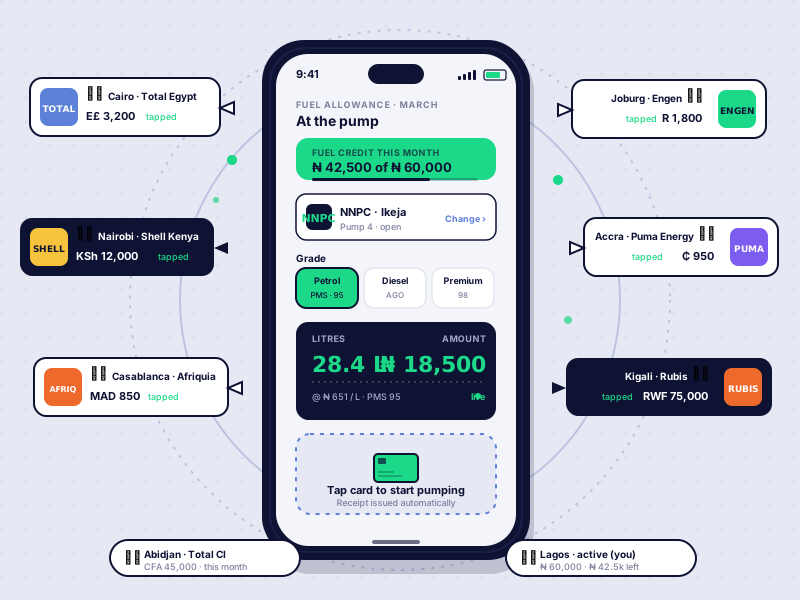
Fuel costs are one of the most significant variable expenses for employees who drive — whether as part of their job or to commute in cities where public transport is limited. A monthly fuel allowance sits in a different psychological category from other benefits: it does not require a new habit, it applies to something employees already do every week, and the relief it provides is immediate and tangible.
Who values fuel allowances most
- Field sales teams: reps covering territory across Lagos, Abuja, Nairobi or Cairo drive significant distances monthly. Fuel is a direct operational cost that out-of-pocket reimbursements handle badly.
- Senior and C-suite staff: across Africa, company car or fuel allowance is still a strong signal of seniority. Including it in a structured benefits package formalises what many companies currently do informally.
- FMCG and logistics operations: distributors and logistics managers drive daily. The fuel allowance is not a benefit to them — it is a business enabler.
- Hybrid employees with long commutes: in Lagos and Cairo in particular, commutes of 60–90 minutes by car are common for professionals living outside the CBD.
Fuel station partners by market
- Nigeria: NNPC retail stations, Ardova (formerly Forte Oil), MRS, Total Energies Nigeria.
- Kenya: KenolKobil, Total Energies Kenya, Shell Kenya, Vivo Energy.
- Egypt: Total Energies Egypt, Shell Egypt, Wataniya stations.
- South Africa: Shell, BP, Engen, Total Energies SA.
- Ghana: Total Ghana, Shell Ghana, Goil stations.
- Morocco: Afriquia, Total Maroc stations.
How to structure the allowance tiers
Fuel allowances work best as a tiered benefit by seniority and role type. A typical structure: junior staff with company cars or field roles at one tier, mid-level managers at a second, and senior leadership at a third. Field teams often receive a higher fuel allocation than office-based managers at the same seniority level because the expense is genuinely operational.
Fuel vs. transport credit: which to offer
For employees in cities with functional ride-hailing infrastructure — Lagos, Nairobi, Cairo — a transport credit combining ride credits, fuel vouchers and metro passes is more flexible than a pure fuel allowance. For field teams and peri-urban employees, a dedicated fuel credit is cleaner. Offering both within a single transport category and letting employees direct the allocation works best at scale.
See how RibiBenefits delivers fuel allowances in your market
Explore the fuel allowance →

