Grocery Allowance
Help your team feed their families.
A monthly grocery credit redeemable at major supermarkets and local markets across Africa. Practical, valued, used every week.
Food inflation across much of Africa has made the household weekly shop a genuine financial stress point. A grocery allowance isn't just a 'nice-to-have' benefit — it's a direct, visible contribution to household stability that employees feel every single week. The perceived value consistently outperforms equivalent cash.
30+
Supermarket chains
6
Countries
1–2x
Weekly touchpoints
Yes
Works in-store and online
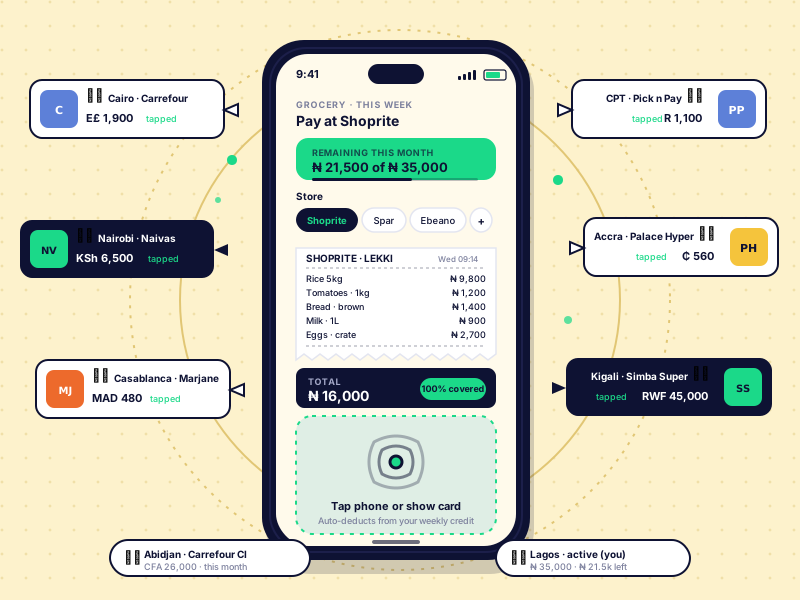
The benefit explained
What is it, exactly?
A monthly credit employees use at partner supermarkets, online grocery platforms, and local market partners. Covers the weekly shop — not just lunch. In markets where food inflation has been significant, a grocery allowance is a meaningful contribution to household costs that employees notice every single week.
Step by step
How it works
From setup to employees spending — here's the full flow.
Your company sets a monthly grocery credit per tier.
Credit loads to each employee's BenefitsCard on the 1st.
Employees present their card or app at partner supermarkets at checkout.
Works for in-store and online grocery orders where supported.
Unused credit resets monthly.
Full coverage
What's included
The difference
Before RibiBenefits vs. after
- Rising food inflation quietly erodes real wages
- No company support for household food costs
- Employees mention salary insufficiency in exit interviews
- Benefits package doesn't address everyday life
- HR has no data on which benefits employees actually use
- Monthly grocery credit offsets inflation impact
- Company visibly contributes to household food budget
- Salary concern drops in engagement surveys
- Benefits now relevant to daily family life
- Real-time grocery benefit utilisation tracked in dashboard
For your organisation
Why HR teams choose it
Addresses real household pressure
Food inflation across Africa has made the weekly shop a financial stress point for many employees. A grocery credit directly reduces this — and employees notice.
High perceived value vs equivalent cash
A GH₵400 grocery credit feels more valuable than GH₵400 added to salary — ring-fenced spending has higher perceived value than equivalent cash.
Complements meal allowance
Meal allowance covers the working day. Grocery credit covers the household. Together they form a complete food benefit that addresses both contexts.
Targeting
Who is this benefit for?
This benefit works across many employee profiles. Here's where it has the most impact.
Employees with families and dependants
A grocery credit that stretches the family food budget is immediately and consistently valued. This is most powerful for employees supporting households.
Companies in high-inflation markets
In markets where food inflation has been 15–30%, a grocery credit is one of the most responsive things an employer can do.
All-staff programmes — particularly for junior grades
For junior employees, groceries represent a larger share of income. The impact of a grocery credit is felt most acutely at lower salary bands.
Companies pairing this with meal allowance
Meal + grocery together form a complete food benefit. Employees see employer support for their food costs at every meal.
The question Finance always asks
Why not just add to salary instead?
Grocery costs are invisible in a salary — they compete with rent, transport, debt repayment, and every other expense. A dedicated grocery credit is used for groceries. Employees plan their weekly shop around it. They notice when it lands, and they associate that relief with you. That weekly touchpoint — 4–8 times per month — is brand-building at a deeply personal level.
The perception gap
Equivalent cash added to salary
55% perceived value vs cost
Named benefit credit
87% perceived value vs cost
Based on RibiBenefits employee surveys across African markets, 2024.
Employee perspective
What employees get
Benefits only work if employees actually use them. Here's why they do.
Covers the weekly shop
Not just lunch. A grocery credit that covers a meaningful portion of the household food bill is a benefit employees feel every week.
Works at the stores they already use
Partner supermarkets are the major chains employees already shop at — no behaviour change required.
Applies to family, not just themselves
Grocery credit feeds the family, not just the employee. That context makes it one of the most deeply appreciated benefit categories we offer.
“With food prices the way they've been, our employees were feeling it. We introduced the grocery benefit at ₦15,000/month per employee — not a huge amount, but it was real. People stopped telling us compensation was their top concern. It was as if we'd been missing the obvious thing.”
Where it works
Available markets
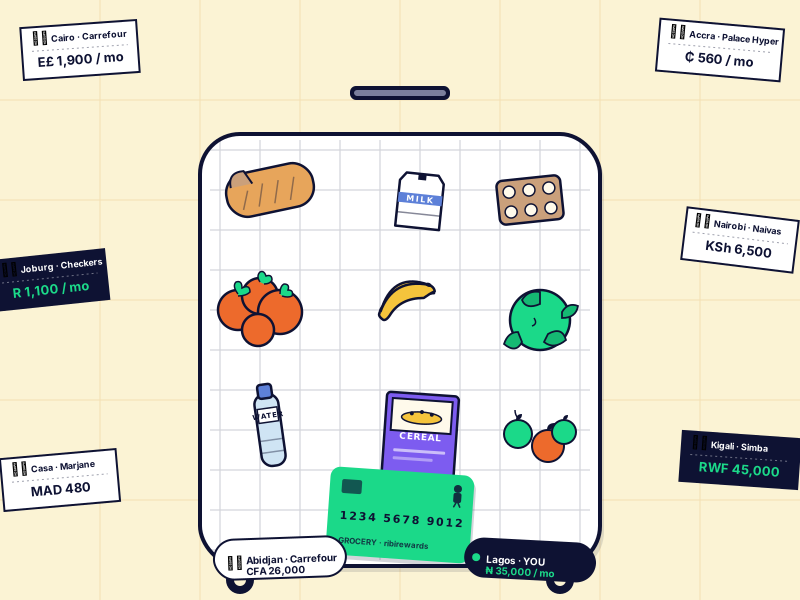
Tax & compliance note
Grocery allowances in kind have varied tax treatment across African markets. In some jurisdictions, they qualify as welfare benefits with favourable employer tax treatment. We will work through the specific position for your markets at onboarding.
Common questions
Questions
Build your package
Pair it with
Most companies combine 3–5 benefit categories. Here's what works well alongside grocery allowance.
Ready when you are
Add Grocery Allowance to your package
Book a demo and we'll show you exactly how it works for your team and markets. Most companies go live within two weeks.
- No procurement process — one contract
- Go live in 2 weeks or less
- Dedicated onboarding support included
- Cancel any time, no lock-in